
What emergency water mitigation is, and what to do while you wait
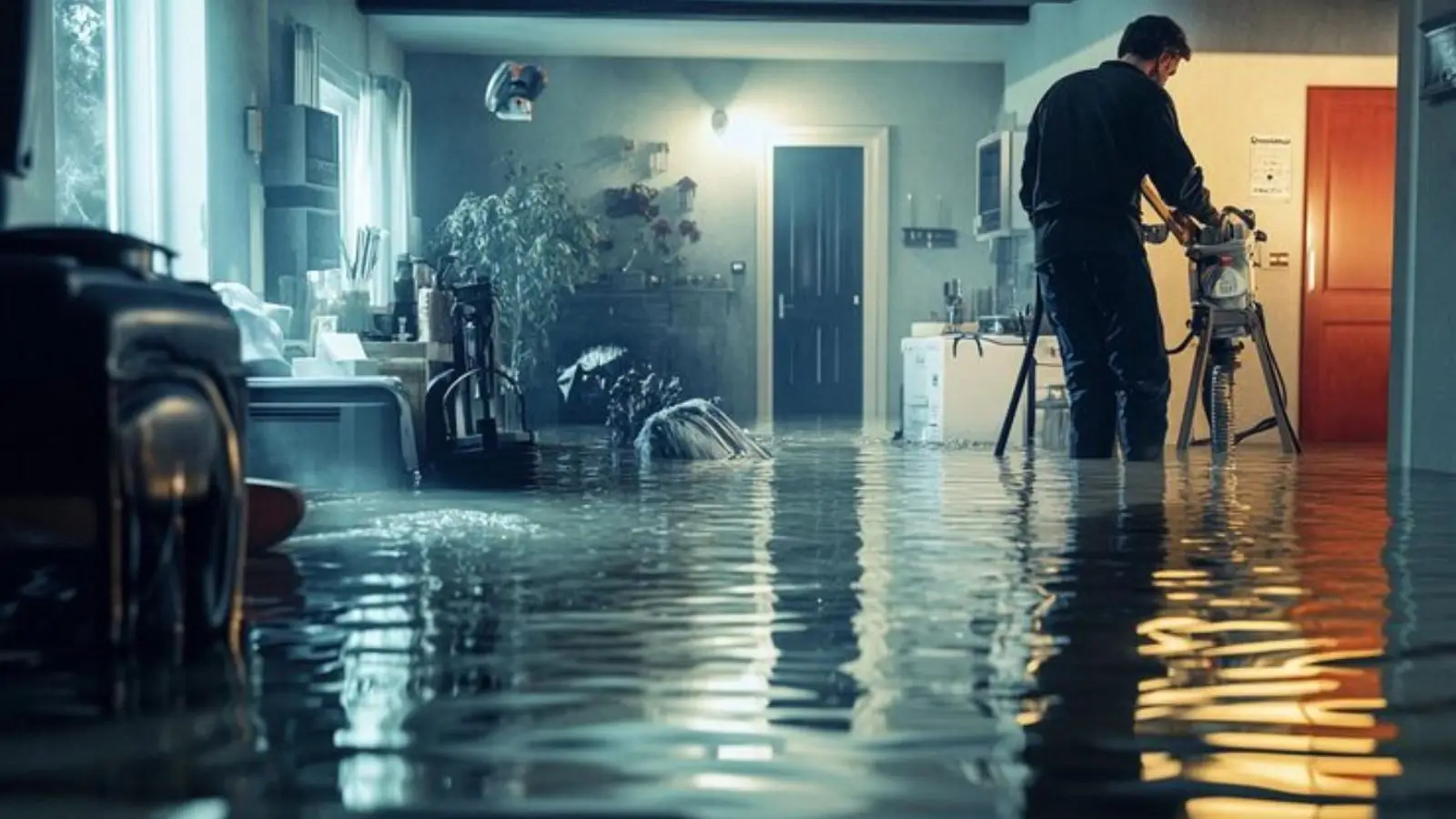
Emergency water mitigation is the work that keeps a leak or flood from damaging more of the building: stopping the source, pulling out standing water, and starting controlled drying before framing, drywall and insulation soak it up. If water is spreading through your Reseda home right now, the 24/7 dispatch line answers at any hour, nights and weekends included.
While the crew is on the way, close the main water valve, lift rugs, laptops and paper off wet floors, and keep children and pets out of any water that came from a toilet, a drain or outdoors. Flip the breaker for a wet room only when you can get to a dry panel without crossing a damp floor.
Carpet is soaking, the ceiling stain keeps spreading, or a closed-up room smells musty?
Each of those is the same problem at a different stage: water is sitting in materials that cannot shed it alone. Mitigation finds where the moisture went and removes it before rot or mold gets a foothold.
Carpet is soaking
Wet carpet and pad hold water against the subfloor. Extraction comes first, then the pad is usually discarded and the carpet is either lifted for drying or replaced.
Ceiling stain keeps spreading
A growing stain means water is still moving above the drywall. The source has to be found and stopped, then the cavity opened and dried.
Room smells musty, nothing looks wet
Odor with no puddle often points to damp insulation, baseboard cavities or underlayment. Moisture meters and a thermal imaging camera read behind the surface.
Describe what you are seeing and we will talk you through the next step
Tell the dispatcher where the water started, which rooms are wet and whether it is still running.
The first 24 to 72 hours, step by step
Stop the source
A shut-off valve or a plumber ends the supply. To check for a hidden supply leak, LADWP describes a meter test: turn off every tap and appliance and see whether the leak-detection gauge on the meter still moves.
Remove standing water
Truck-mounted and portable extraction units pull out the bulk of it. Every gallon pumped is a gallon the dehumidifiers never have to handle.
Inspect and map
Moisture meters and thermal imaging show how far water traveled under flooring and up into walls, often well past the visible wet edge.
Remove what cannot dry
Soaked pad, swollen baseboard and saturated insulation come out. Where drywall has wicked water upward, a flood cut a few inches above the wet line opens the cavity.
Set equipment and start the log
Air movers and LGR dehumidifiers go in, and the first set of readings is written down as the starting point.
Speed matters because mold becomes a worry once wet building materials sit past the two-day mark EPA describes.
Moisture mapping and drying logs
Moisture mapping is a floor plan with numbers on it. The technician marks reading points across walls and floors, records each one, and compares them to a dry reading from unaffected material of the same kind. A thermal camera helps choose where to measure, but the meter supplies the number. Mitigation work is measured against the ANSI/IICRC S500 water damage restoration standard, which is why each visit should leave a written reading behind.
The drying log repeats those readings every day. When the numbers on your wall match the dry reference, drying is finished. When they do not, equipment stays. The log also gives you dated records for the claim, along with photos taken on day one.
Structural Drying
Structural drying means drying the building itself: studs, plates, subfloor, wall cavities and the concrete slab, not just the carpet you can see. Wood and concrete release water slowly, so the work is about controlling air rather than blasting a room with fans.
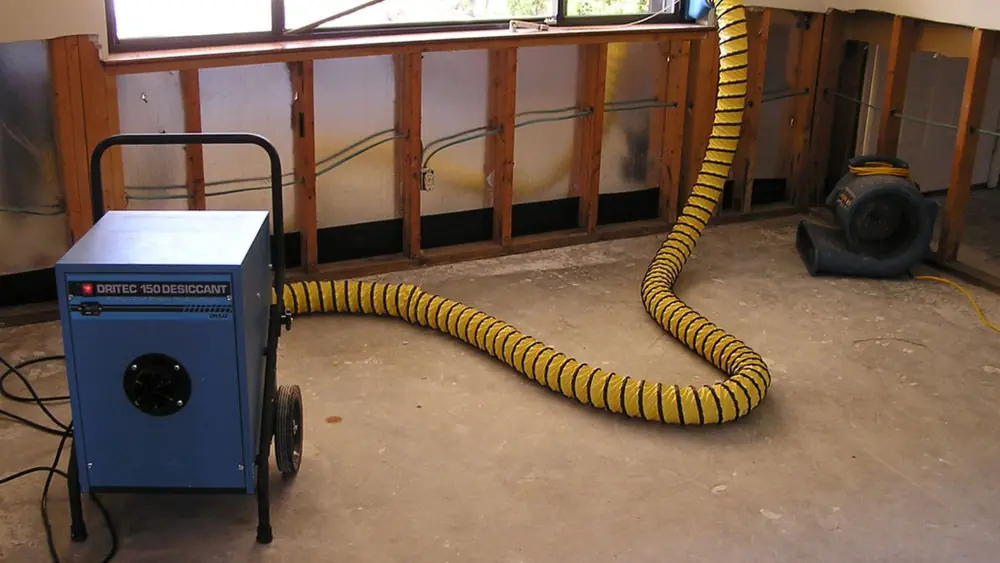
Air movers push dry air across wet surfaces to lift moisture out. Dehumidifiers then pull that moisture from the air so it does not settle somewhere else. Small openings, such as a popped baseboard or a few drilled holes, let air reach cavities that would otherwise stay damp for weeks.
Hardwood may get drying mats that draw moisture up through the boards. Concrete is slow and may keep equipment running after carpet areas finish. Dry is decided by measurement, never by the calendar.
Air movers, LGR dehumidifiers and the rest, in plain words
| Equipment | Job it does | What you will notice |
|---|---|---|
| Air mover | Blows air along floors and walls to speed evaporation | Loud, low fans pointed at wet surfaces |
| LGR dehumidifier | Pulls moisture out of the air, even as the air gets dry (LGR stands for low grain refrigerant) | Warm air blowing out, a hose or tank draining water |
| Moisture meter | Gives a numeric reading inside materials | A technician pressing a probe to walls and floors |
| Thermal imaging camera | Shows cool, damp areas behind surfaces | A handheld camera scan before and after drying |
| Drying mat or cavity setup | Moves air through hardwood or inside closed walls | Panels on the floor or hoses to small wall openings |
Equipment is sized to the room and the amount of water, which is why a shop fan and a household dehumidifier rarely dry a whole loss. Water damage cleanup follows once the structure is dry.
How long drying takes, honestly
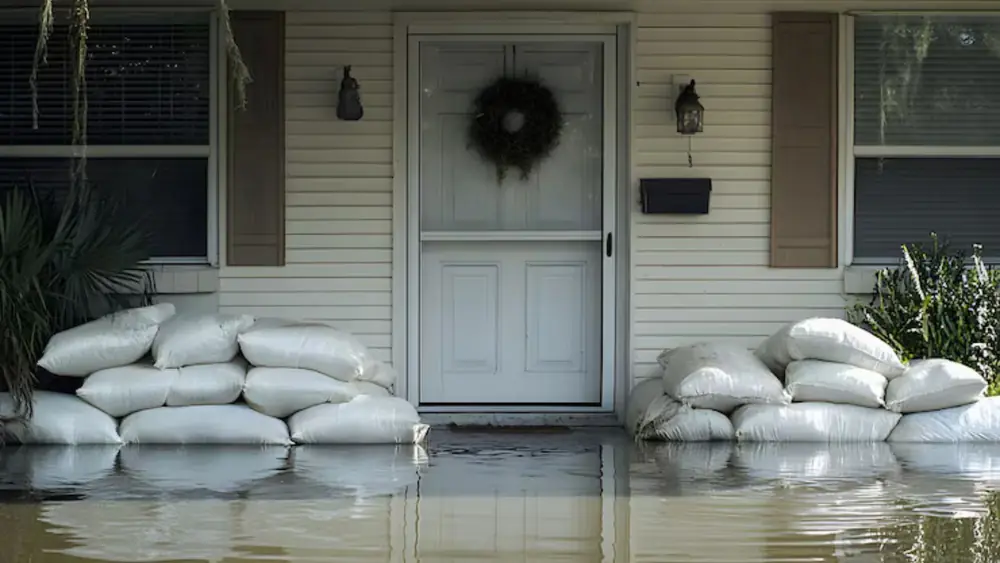
Nobody can fairly promise a number of days before seeing the room. Several jobs run a few days, others longer. These factors decide it:
- Material: carpet dries fast, hardwood and concrete slowly.
- Water category: contaminated water adds removal work first.
- Time wet: water that sat for days has soaked deeper.
- Weather: humid air slows evaporation.
Water, outlets and the electrical panel
Electricity and water do not mix
Do not touch outlets, cords or appliances that are in or near standing water. If the panel is in a wet area or you would have to wade to reach it, stay out and call the utility or 911 about an electrical risk before you call the restoration line.
If you smell gas, leave the home and call from a safe place. Do not use switches or flames.
What sets the scope and price of mitigation
Most callers ask for a quote first, and that is fair. The assessment covers the source, rooms, water category, readings and photos, then a written scope with the price explained before work begins.
Area and number of rooms
More wet surface means more extraction and more equipment.
Water category
Clean supply water, graywater and sewage need different protective steps and disposal.
Materials affected
Hardwood, concrete and insulated wall cavities take more days than carpet.
Equipment days
Air movers and dehumidifiers are tracked per day on the drying log.
Access and demolition
Tight crawl spaces, cabinets and finished walls add labor.
Describe the damage on the dispatch line and a technician will explain what the assessment will cover.
Insurance and your mitigation records
A burst or overflow that happens suddenly is the kind of loss many policies cover. Long-running seepage usually falls outside, and flood water generally needs its own flood policy, so read the wording for your own home. Insurers expect reasonable steps to limit further damage. Dated photos, receipts and the drying log become the paper trail for your adjuster.
Dispatch from Reseda and nearby
Dispatch runs out of Saticoy Street in Reseda, covering ZIP 91335. Homes in the Encino ZIPs 91316 and 91436 are a short drive east. If you live there, the page on water damage restoration in Encino shows what to expect.
If standing water is deeper than an inch or two in the whole room, start with emergency water removal. Storm or groundwater events fall under flood damage restoration, and any dark spots on drywall are covered under mold remediation.
Frequently Asked Questions
Do you handle water mitigation emergencies at night or on weekends in Reseda?
Yes. The dispatch line is staffed 24/7, including nights, weekends and holidays. Call, describe the water, and you will get next steps while the crew is arranged. Same-day response when available, though no arrival time can be promised before the dispatcher knows your location and the crew's position.
My ceiling stain keeps spreading and the carpet is soaking. What do I do first?
Shut off the main water valve if you cannot find the source. Move belongings off wet carpet, keep people out of the room if the ceiling is sagging, and avoid light fixtures with water in them. Then call. A spreading stain means water is still moving, and each hour makes the drying job larger.
How long will structural drying take?
It depends on the materials, the water category, how long things stayed wet and the weather. Carpet areas may dry quickly. Hardwood, plaster and concrete take longer. The drying log shows daily progress and drying ends when readings match the dry reference.
Can I rent air movers and a dehumidifier and do this myself?
We do not offer equipment rentals. Air movers and dehumidifiers work together, and without a meter you cannot tell if wall cavities are dry. Poorly dried framing is a common cause of musty odor later. If you do try it yourself, aim for 30 to 50 percent humidity per EPA.
Will mitigation waterproof my house or fix the leak?
No. Restoration deals with the water that already got in. Fixing a pipe is a plumber's job, and keeping groundwater out of a foundation is waterproofing, a different trade. We will tell you which one you need.
How much notice do you need, and can someone just look at it?
Call as soon as you know water is present. An assessment is a visit where a technician checks the source, takes readings and explains the scope and price before work starts. Same-day response when available.
Water still spreading? Call the 24/7 line at (818) 337-2642.