
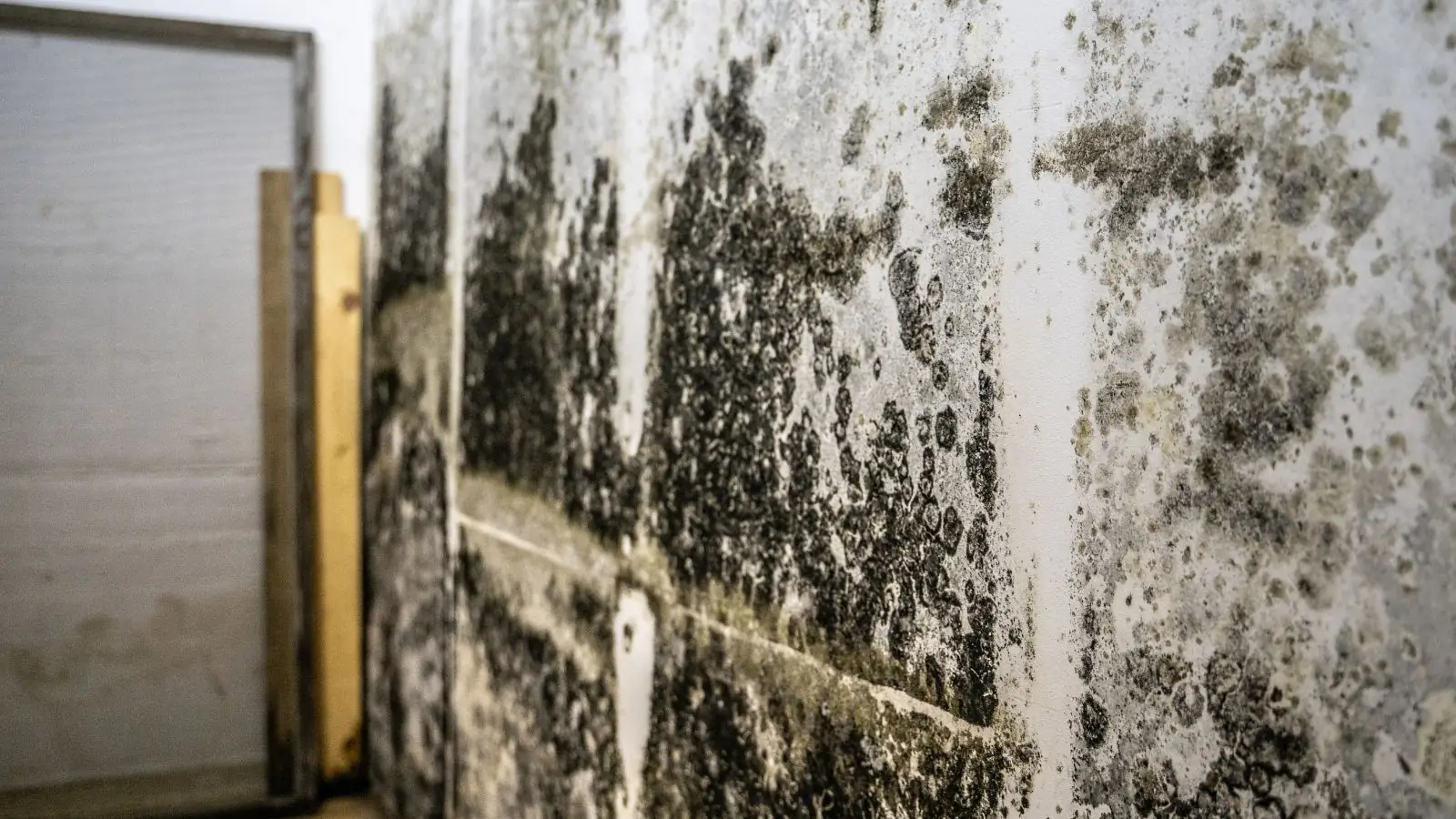
Many Reseda homes have no basement, and that changes the question
No public source we could find says how many Reseda properties have a basement, so this guide does not guess. If yours does, or you have a sunken garage room, a ground-level utility room with a concrete floor or a storage closet against an exterior wall, the same rules apply to all of them.
What these spaces share is poor drying. They sit against soil or slab, they get little airflow, and stacked boxes keep walls from releasing moisture. Mold needs moisture to grow, so a closed room that stays damp is where trouble usually begins.
If you live in a single-level home or an apartment with nothing below grade, keep reading anyway. The moisture hunt and the containment steps below fit a bathroom wall, a garage with finished drywall or a laundry nook just as well.
Find the water before you touch the mold
Removing mold while the source keeps feeding it only resets the clock. Callers often tell us about a recent leak: a toilet supply line, a sink drain, an AC condensate line, a roof or a gap in siding. Whatever that leak is, it gets fixed before anyone scrubs or cuts.
Walk the room with a flashlight and look for the usual suspects. Check the water heater fittings, the washing machine hoses, a hose bib that drips inside the wall, a downspout that empties beside the foundation and a sprinkler head aimed at the stucco.
A moisture meter turns a hunch into a number. Drywall or framing that still reads high after the visible water is gone points to a hidden source or incomplete drying. A hygrometer on the shelf also helps, because a basement that sits above EPA's 60 percent humidity ceiling keeps feeding mold.
Found mold and a damp wall together?
Describe what you see to the 24/7 line. We will tell you whether it sounds like a moisture problem, a mold problem or both.
Reseda, the Sepulveda Basin and what a damp lower room means after a storm
The Army Corps lists Reseda as one of six communities bordering the Sepulveda Basin, and the City Bureau of Engineering describes the basin as a flood management basin of roughly 2,000 acres built into the LA River system. That tells you the area has real flood infrastructure. It does not tell you whether your lot floods, so look up your own address on the FEMA Flood Map Service Center before assuming anything either way.
NOAA's 1991 to 2020 normals for Van Nuys Airport put annual rainfall at 13.42 inches, and December through March supplies about 82 percent of it by our arithmetic on those figures. Practically, a closed lower room is most likely to take on seepage or a plumbing surprise in that stretch, so open it up and check it with a meter in spring, not only after a visible leak.
No state licensing regulations for mold remediators exist, according to CDPH's mold FAQ. When you hire for this work, ask for a written scope, ask whether crews follow S520 and keep your own copy of the drying log.
Sources: U.S. Army Corps of Engineers, Sepulveda Basin master plan, City of LA Bureau of Engineering, Sepulveda Basin, FEMA Flood Map Service Center, NOAA NCEI 1991-2020 normals, Van Nuys Airport, CDPH mold FAQ, EPA, Mold cleanup in your home, EPA, Brief guide to mold, moisture and your home
Which space, which likely source, what to do first
| Space | Common moisture source | First move |
|---|---|---|
| Basement or cellar room | Wall seepage after storms, floor drain backup, plumbing drip | Find where water enters, then pull stored items off the floor |
| Garage room or converted garage | Slab dampness, leaking water heater, roof or door-seal gaps | Check the heater base and the lowest drywall edge with a meter |
| Utility or laundry room | Supply hose, drain pan overflow, dryer vent condensation | Replace the failing part and run a dehumidifier |
| Storage closet on an exterior wall | Stucco crack, window leak, pipe inside the wall | Photograph, open a small inspection section only if the wall is dry to the touch |
| Under-stair or crawl space | Plumbing leak, poor ventilation, soil moisture | Have the area inspected before anyone crawls in |
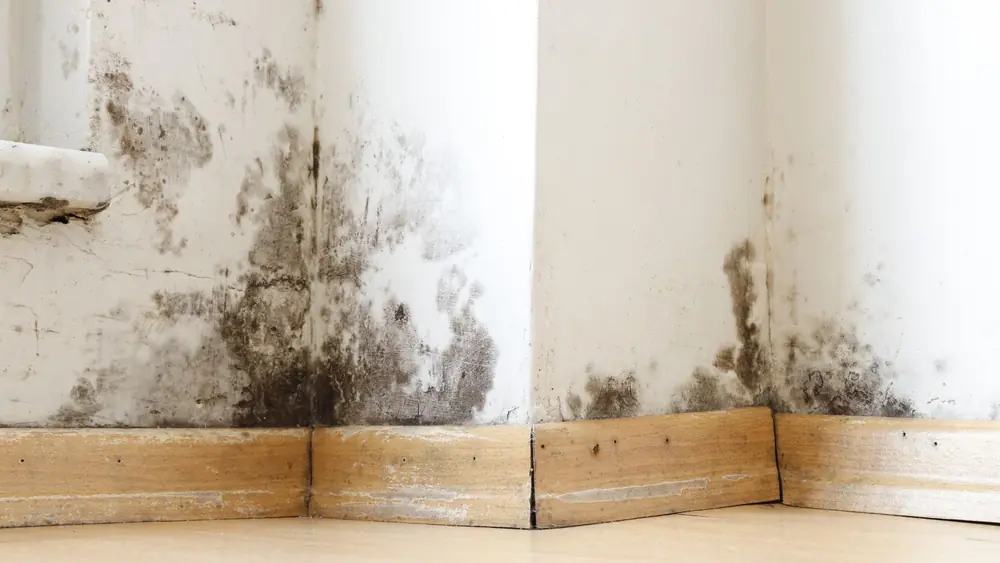
What removal looks like when it follows S520
Mold remediation has a published industry standard, ANSI/IICRC S520, and a fair question for any bidder is whether its crews follow it. The sequence below is the shape of a job done that way.
Assess and map
A technician measures moisture with a meter, scans walls with a thermal imaging camera and sketches how far the damage runs.
Contain
Plastic sheeting seals the work area, and HEPA air scrubbers hold the room under negative pressure so spores are not pushed into clean rooms.
Remove and clean
Porous materials such as wet drywall, carpet and insulation are cut out and bagged. Wood framing is cleaned with HEPA vacuums and damp wiping.
Dry and verify
Air movers and LGR dehumidifiers bring materials back to normal readings, and the crew records them in a drying log.
Clear
A separate assessor can run independent clearance testing, so the company that did the work is not grading its own job.
Our mold remediation page goes deeper on containment and clearance, and the steps there match this outline.
What you can handle yourself, and where to stop
Occupants can usually handle a small area, and EPA draws that line near 10 square feet. Wear an N-95 respirator, gloves and goggles, and never paint over mold. Painting hides it and leaves the moisture in place.
Stop and call when the patch is larger, when it keeps returning to the same wall, or when the room took on flood water or sewage. Sewage or other contaminated water is professional work by EPA's reckoning, and EPA also says not to run an HVAC system you suspect is contaminated.
Carpet, ceiling tiles and similar porous items may need to be thrown out after a flood. If water came in from a storm or a backed-up line, the job starts as flood damage restoration and mold work follows once the structure is dry.
Health questions about mold exposure belong to a physician. We can describe the building side only: where the moisture is, what is wet and what has to come out.
Same problem, different street
Damp garage rooms and closed-up storage spaces show up across the Valley. We take the same calls from owners with Northridge homes and from people in Winnetka, and the first question is always where the water is coming from.
Frequently Asked Questions
Does living near the Sepulveda Basin mean my lower room will flood?
Not by itself. The basin is a flood management project, and its presence says little about one property. A FEMA map search by street address answers the zone question, and your insurer can explain flood coverage, which standard policies usually exclude.
Can I clean basement mold with bleach?
Bleach does little on porous materials such as drywall and carpet, because the growth reaches below the surface. Drywall falls in the porous group that CDPH says rarely cleans up well. Dry wiping or spraying also stirs up spores, so contain first.
Do I need mold testing before removal?
A lab test before cleanup adds little when growth is plain to see or smell, and CDPH does not recommend one. Testing earns its place afterward, as independent clearance testing that checks whether the work met the written scope.
My buyer's lender wants the mold addressed. What do I do?
Ask the lender what documentation it wants, then plan for a written scope, completed remediation and independent clearance results. We cannot promise any lender will accept a given report, so confirm that in writing with them.
How do I know the moisture is gone?
Meter readings on the affected materials should match readings on an unaffected wall in the same room, and they should hold for several days. A drying log with dated readings is your proof.
Water still spreading? Call the 24/7 line at (818) 337-2642.