
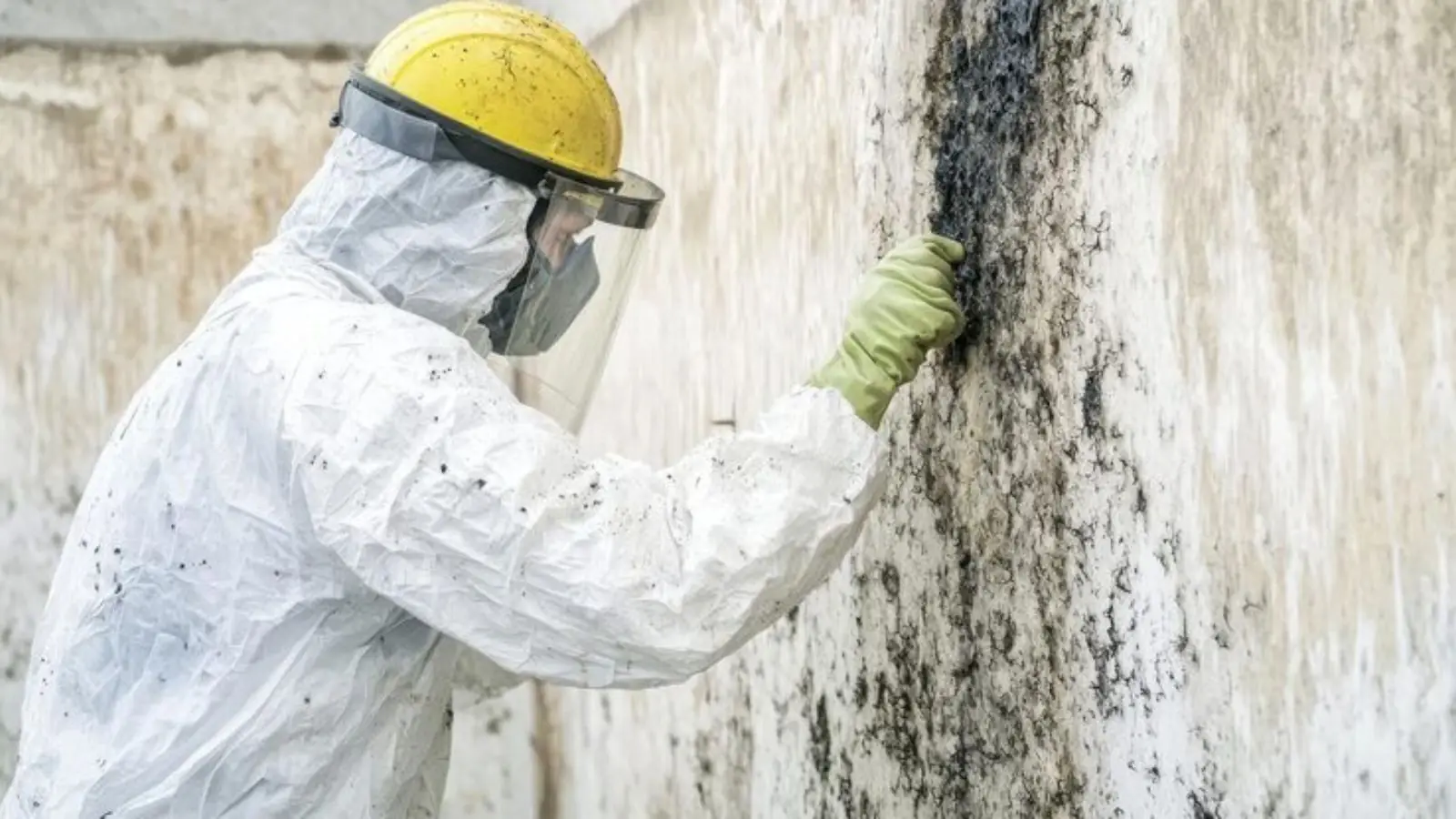
Black Mold Is a Color, Not a Diagnosis
People searching for how to get rid of black mold usually mean dark green, gray or black growth on a wall, ceiling, closet corner or the underside of a cabinet. The color alone does not tell you which species it is. Only a lab can identify species, and the identification rarely changes what a remediation crew does.
So the useful question is not what to call it. It is where the moisture comes from, how much material is affected, and how to remove it without spreading it. Anything about how it may affect someone's health should go to a physician, not a website.
Four Shortcuts That Waste Time
Spraying bleach
Bleach sits on the surface of a porous material such as drywall or wood, while the growth sits inside. Public health guidance from CDPH is that wallboard and other porous materials seldom come clean, so affected pieces typically come out.
Painting over it
EPA says not to paint over mold. The coating hides the patch and traps moisture behind it.
Fogging the room
Fogging and deodorizing sprays can mask an odor, yet they do not remove the damaged material the growth is feeding on.
Scrubbing dry
Brushing or sanding releases particles into the air and carries them to rooms that were clean before.
Dark growth spreading in a room?
Keep the door closed and call the 24/7 line. We will schedule an inspection and explain the scope before any work starts.
Reseda's Dry Summers and Wet Winters Shape Mold Risk
NOAA's 1991 to 2020 climate normals for Van Nuys Airport, the nearest station we verified (not a Reseda reading), put annual precipitation at 13.42 inches. December through March accounts for roughly 10.99 inches, about 82 percent by our arithmetic, while July averages 0.00 inches. The practical result is that outdoor moisture arrives in a short winter window, so roof and window leaks tend to show up as ceiling and wall stains after those storms.
In the dry months, moisture problems usually come from inside: plumbing, bath and laundry humidity, and air-conditioner condensate. If you find dark growth in June or August, look first at indoor sources rather than rain.
Flooded carpet and ceiling tiles are often beyond saving, according to EPA. After a winter leak, pull back a corner of carpet and check the padding before assuming a stain is only cosmetic.
Sources: NOAA annual precipitation normals, Van Nuys Airport, NOAA monthly precipitation normals, Van Nuys Airport, EPA mold cleanup in your home, EPA brief guide to mold, moisture and your home, CDPH mold frequently asked questions
Fix the Water Before Anything Else
Every mold job we hear about starts with a leak or a humid spot. Callers often mention a toilet supply line, a leak under a bathroom sink, a roof leak, siding gaps or a clogged air-conditioner condensate line. If that source keeps running, nothing you remove stays removed.
Call a plumber, roofer or HVAC technician to repair the source, then dry the structure. Water mitigation covers that drying phase with moisture meters, air movers and LGR dehumidifiers. Target the first two days for getting wet materials dry, then hold indoor humidity under 60 percent, ideally 30 to 50 percent, per EPA.
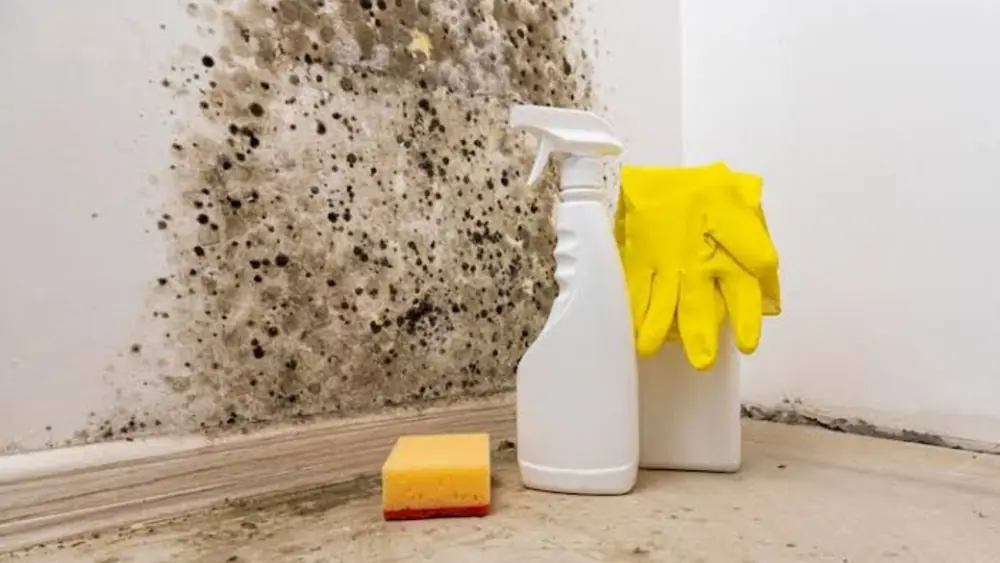
How a Remediation Job Runs
Inspect and map
A technician checks the visible area, reads moisture in surrounding materials, and looks for hidden spread behind baseboards or inside cavities.
Contain
Plastic sheeting seals the work zone and a negative air setup with HEPA filtration keeps airflow moving into the area, so particles do not drift to other rooms.
Remove affected materials
Drywall, insulation and carpet padding that are damaged are cut out, bagged and carried out. Framing is cleaned with HEPA vacuuming and wiping.
Dry and verify
Equipment runs until moisture readings in the structure come down. Many owners then hire an independent assessor to check the result.
Rebuild
After clearance, new board, paint and trim go in. That phase is water damage repair rather than mold work.
The process follows ANSI/IICRC S520, the published standard for professional mold remediation. Ask any company if its crews work to it and request the written scope.
Callers often ask for a price before anything else. Scope sets the price: how many square feet are affected, which materials must be removed, how many containment zones are needed, how long equipment runs and what finishing is wanted. An inspection turns those unknowns into a written scope you can compare.
No Honest Contractor Can Promise Mold Never Returns
Mold spores are part of ordinary indoor and outdoor air. Remediation removes the growth and the damaged material and returns moisture to normal, but a future leak or sustained humidity can start a new problem. We do not claim otherwise.
Your strongest protection is watching for moisture. A hygrometer, working bath fans, a quick look under sinks and around the water heater each season, and fast action after any leak do more than a one-time treatment.
Keep dated photos of the growth, the leak and the cleanup. If a buyer's lender or a landlord asks for proof the problem was handled, a written scope, moisture readings and an independent assessor's report give you something concrete to hand over. We cannot say what any lender will accept.
When You Can Handle It and When You Cannot
Small patches are the exception. EPA's threshold is about 10 square feet, below which occupants can usually do the cleaning in an N-95 respirator, gloves and goggles. Past that size, in a space with an HVAC return, or after sewage or contaminated flooding, the guidance points to professionals.
If the growth appeared after a sizable leak, pictures of the area help us plan. Neighbors in Northridge and Tarzana dealing with the same problem get the same inspection steps, since the process does not change at the city line.
Frequently Asked Questions
Does dark growth on a Reseda ceiling after winter rain mean the roof is leaking?
It can. Most of the area's rain falls from December through March by NOAA normals, so a stain that appears afterward often traces to the roof, an attic vent or flashing. A roofer should inspect before any drywall work.
Do I need a test to know if it is black mold?
Testing makes little sense while mold can be seen or smelled, per CDPH. A test is more useful later, when an independent assessor checks that the cleanup worked.
Is bleach ever appropriate?
On a small patch of hard, nonporous surface, the EPA guide describes cleaning methods you can read for yourself. On drywall, wood and ceiling tile, surface treatment is a poor fit, and affected pieces usually come out.
Can I stay in the house during remediation?
Often yes if containment is set up correctly, though it depends on the size and location. Ask about it when the scope is reviewed, and take any health concerns to your physician.
Will the mold come back?
We cannot promise either way. If the moisture source is fixed and humidity stays in range, conditions for regrowth are removed. New leaks start the cycle again.
Water still spreading? Call the 24/7 line at (818) 337-2642.