
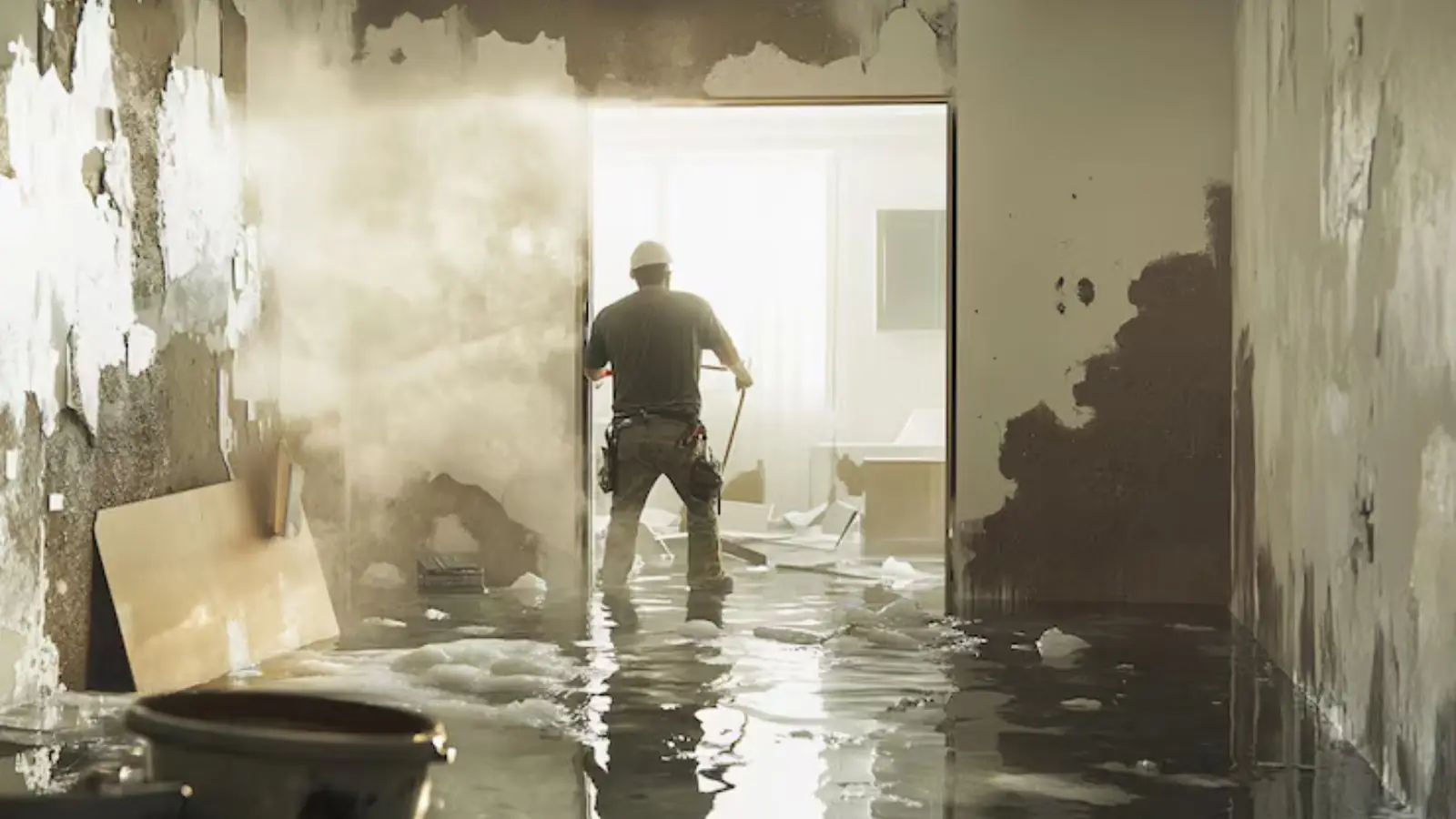
Dry in Place or Cut Out: The Water Category Decides
Drywall is gypsum sandwiched between paper. The paper wicks water upward like a wick in a candle, and the gypsum softens as it soaks. Drywall water damage repair therefore starts with one question: where did this water come from?
Restoration standards sort water into three categories. The category sets the rules, and no amount of drying changes a Category 3 decision.
| Category | Typical source | Drywall decision |
|---|---|---|
| 1, clean | Supply line, overflowing sink, rain through a clean roof surface | Often dried in place if caught early and readings come down |
| 2, gray | Dishwasher or washing machine discharge, aged Category 1 water | Case by case, and commonly cut out where it has soaked in |
| 3, black | Sewage, flood water from outdoors, long-standing water | Cut out and discard the affected board and insulation |
Clean water that sits long enough becomes a worse category. That is why the clock matters even when the source looks harmless.
How Wet Drywall Gets Tested Before Anyone Cuts
Eyes miss a lot. A wall can look dry and read high, or look stained and read normal. A technician combines tools.
Moisture meter
Pin or pinless readings taken up the wall at regular heights find the top of the wet zone.
Thermal imaging camera
Cooler patches on the image often mark wet areas behind paint, to be confirmed by meter.
Touch and tap
Soft, crumbly or hollow-sounding board has lost strength and will not recover.
Fasteners and seams
Rust at screw heads, lifted tape and cracking at joints show water has been present for some time.
If a wall has a bad smell, the paper face is peeling, or the baseboard has swollen, plan on removal rather than drying. The decision is much easier when readings are taken early.
Standing water against a wall right now?
Get the water off the floor and call the 24/7 line. The faster the wall base is opened, the more drywall can be saved.
Reseda Drywall Jobs: Permits, Licenses and the LADBS Office in Van Nuys
The Los Angeles Department of Building and Safety lists drywall replacement with no new walls in single-family homes and duplexes among its Express Permits. Express permits skip plan check but are still permits. The LADBS Homeowners Guide adds that plumbing, electrical and heating work need their own separate permits, which matters if the cut exposes pipes or wiring that must be changed.
LADBS runs a Van Nuys office at 6262 Van Nuys Blvd, Room 251, and takes questions at 3-1-1 inside the city. Ask before work begins whether your repair needs a permit rather than assuming it does not.
Hiring someone for a drywall job? Under CSLB rules, any project priced at $1,000 or more once labor and materials are added up needs a licensed contractor, and so does work that requires a permit or involves employees. Look up the license at cslb.ca.gov before handing over a deposit.
Sources: LADBS Express Permits information bulletin, LADBS Homeowners Guide to Permits and Inspections, LADBS Van Nuys office, LADBS contact page, CSLB: What kind of contractor do I need, CSLB disaster help center, CDPH: Frequently asked questions about mold, Council District 12: Reseda community page
What a Flood Cut Is and Why It Matters
A flood cut is a horizontal cut made along the wall above the highest point water has reached. The wet lower portion comes off. The dry upper portion stays up, which saves paint, trim and time.
Cutting short of the wet line is the common mistake. Water wicks above what you can see, so the cut goes higher than the stain, and the opening is checked with a meter before it is judged dry.
Pull baseboards and trim
Removing them exposes the base of the wall and lets air into the cavity.
Mark and cut
A line is drawn above the wicking level and the board is scored and removed in panels or strips.
Remove wet insulation
Batts that have soaked up water hold it and do not dry in a closed cavity, so they come out with the board.
Dry the studs and plates
Air movers and an LGR dehumidifier work on the open framing until readings match dry reference lumber.
The tear-out, debris removal and sanitizing belong to water damage cleanup, which comes before any rebuilding.
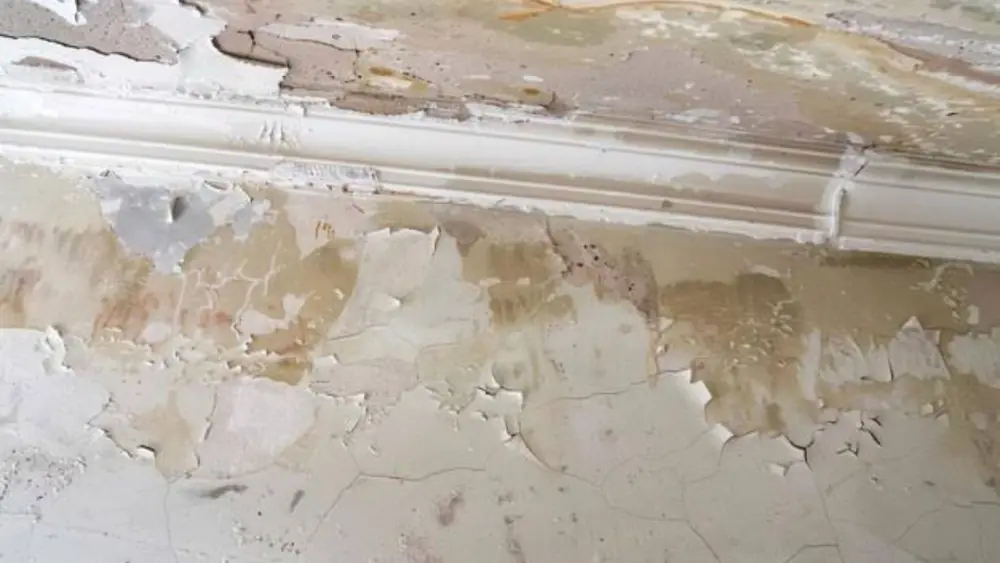
Patching, Taping and Texture After the Cut
New board goes in only after the framing reads dry. Hanging over damp studs traps moisture behind fresh drywall and invites a repeat problem.
Seams are taped and coated with joint compound in thin passes, with sanding between each one. Thin coats feather into the wall. One heavy coat shrinks and cracks as it cures.
Texture is where repairs give themselves away. Orange peel, knockdown and smooth walls each need their own technique, and a primer coat evens out the surface so paint absorbs uniformly. Painting the full wall from corner to corner hides the join. This stage is covered under water damage repair.
What Drying Cannot Rescue
- Drywall that sat in contaminated water, no matter how clean it looks afterward.
- Board that has crumbled, split at the paper or lost its shape.
- Insulation that stayed wet in a closed wall.
- Walls with a persistent musty smell after the source was fixed.
- Areas where mold is visible across porous drywall.
Once mold is established in drywall, scrubbing rarely works, and the California Department of Public Health says materials of that porous type generally cannot be cleaned well. The practical outcome is removal, not scrubbing. If you suspect sewage in the wall, treat it as a safety job and keep the area clear until a crew assesses it.
Crews serving Woodland Hills and Winnetka, both of which border Reseda, follow the same assessment steps.
Frequently Asked Questions
Do I need a permit to replace drywall in my Reseda home?
Swapping out drywall in a house or duplex without adding walls falls under an LADBS Express Permit, which is quick because there is no plan check, but it is still a permit. Rules vary by job, so ask LADBS by calling 3-1-1 before work starts.
Can wet drywall dry out without cutting it?
Sometimes, when the water was clean, the board is firm and the drying starts early. Meter readings over the following days decide. If the paper is peeling, the board is soft, or the water was contaminated, it comes out.
Does the insulation behind wet drywall need to be replaced?
Usually yes when the cavity was soaked. Wet batts hold water against the framing and rarely dry in a closed wall. A technician checks the cavity with a meter and a camera first.
How high should a flood cut go?
Above the highest point the water reached, including the wicking line. The meter, not the stain, tells you where the wet zone ends.
Can I do drywall repair myself?
Small dry patches are a common DIY job. For anything involving a wet wall, contaminated water, or work valued at $1,000 or more, California requires a licensed contractor under CSLB rules.
Water still spreading? Call the 24/7 line at (818) 337-2642.