
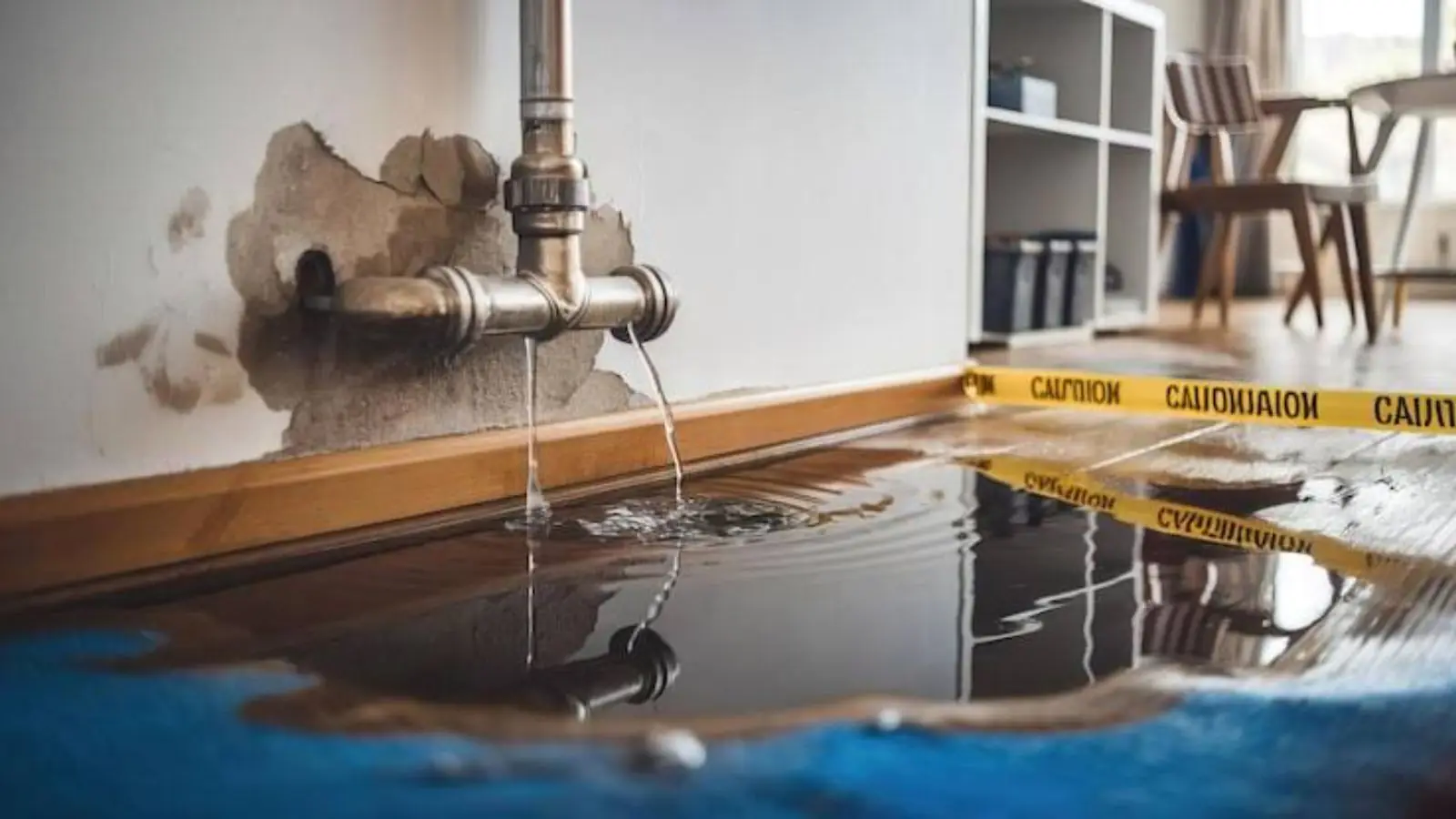
Burst Pipe Water Damage: The First 15 Minutes
Burst pipe water damage cleanup starts with stopping the flow, because every minute of pressurized supply water adds gallons to your floors, walls and the ceiling of the room below. Extraction and drying can only begin once the water is off.
Close the main shutoff valve
Turn it clockwise until it stops. A gate-style valve may take several full turns, while a quarter-turn lever sits across the pipe when open and in line with it when closed.
Open a low faucet
With the main closed, open the lowest tap in the house to let the leftover pressure drain out of the broken line.
Deal with power only if it is safe
If water is near outlets, a panel or appliances and you cannot reach the breaker box without stepping through water, stay out and call the utility or 911 before anything else.
Lift what you can
Get electronics, documents, rugs and small furniture onto dry counters or beds. Pull the cushions off sofas. Leave heavy pieces where they are.
Call the 24/7 line
Tell the dispatcher where the water is, how far it has spread, and whether you have shut it off. That helps the crew bring the right extraction units.
Find Your Main Shutoff Valve Today
Most people look for the valve for the first time while water is running down the hallway. Do it on a dry day instead. Check the outside wall nearest the street, the garage, a utility closet and the area around the water heater.
We cannot tell you where your valve sits, because that depends on how your property was plumbed. We also did not find a utility source that states the standard location, so treat any rule of thumb with caution. Once you find it, turn it off and on once to make sure it moves, and tie a bright tag to it.
If the valve is seized or leaks when turned, that is a job for a plumber, and it is worth fixing before a surprise break makes it urgent.
The same advice holds for neighbors and relatives who live next door in Reseda's bordering communities. Our pages on water damage restoration in Winnetka and the Northridge service area cover how dispatch works for those addresses.
Water still coming through a ceiling or floor?
Stop the flow first, then call the 24/7 line. We start extraction and set up drying equipment as soon as a crew reaches you.
Reseda Burst Pipes: LADWP Contacts and Older Housing
If the water seems to come from the meter or the supply line outside your property, LADWP states that its customer service line, 1 (800) 342-5397, is available 24/7 for water emergencies. Call it in addition to, not instead of, closing your own main valve. We could not confirm from LADWP which side of the meter belongs to the customer, so ask the dispatcher.
LADWP also publishes a leak check: shut off all water inside and outside, then watch the meter's leak-detection gauge. If it keeps moving, water is escaping somewhere. That is useful when you suspect a hidden slab or underground line break but see no puddle.
Housing built in the 1950s makes up the biggest slice of the local stock at 39.2 percent, and about 56 percent is single-unit, according to a demographic profile from LA City Planning that covers this plan area. Age alone does not mean a pipe will fail, but it is a reason to have a plumber inspect supply lines and shutoffs, especially before a remodel opens the walls.
Sources: LADWP water quality and emergency line, LADWP how to detect a water leak, City Planning Reseda profile, California Department of Insurance claim guidance
What Cleanup Looks Like Once the Water Is Off
Clean supply water is Category 1 under the ANSI/IICRC S500 standard, but it does not stay that way. Water that sits in carpet padding, behind baseboards or in insulation picks up contamination and can be reclassified as it ages. That is one reason the first day matters.
A crew begins with emergency water removal, using truck-mounted or portable extraction units to pull standing water off hard floors and out of carpet. Then they map the damage with moisture meters and a thermal imaging camera, which shows cool, wet areas behind finished surfaces that you cannot see.
Wet baseboards, saturated drywall and soaked padding are usually removed so air can reach the framing. Air movers push dry air across surfaces while LGR dehumidifiers pull moisture out of the room. Readings are logged each visit, and equipment stays until the materials reach a dry standard. That sequence is the core of water mitigation.
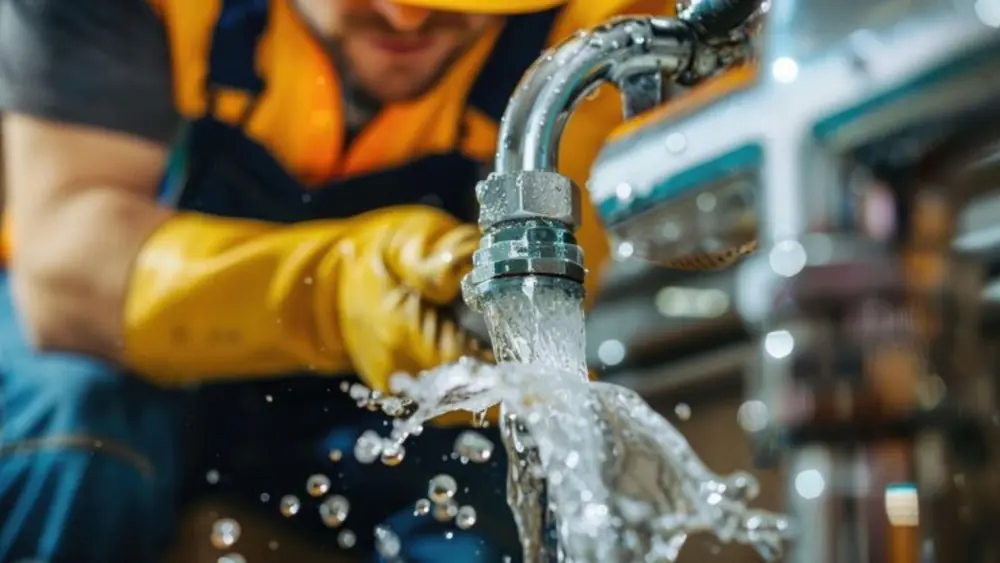
Where Burst Pipe Water Ends Up
Under flooring
Water slips beneath laminate and wood planks and wicks into subfloor. A surface that looks dry may still read high on a meter.
Inside walls
A break behind a wall fills the cavity and soaks insulation and the bottom of the drywall, often with little visible sign at first.
Through the ceiling
A break upstairs or in the attic drips into the room below. A bulging ceiling holds water, so call before it lets go.
Into cabinets
A failed line under a sink or a washer hose swells particleboard cabinet bases, which often cannot be dried back to shape.
Document the Loss Before Anything Moves
Take wide photos of each room and close photos of the broken pipe, the wet surfaces and any damaged belongings before you move them. Video with a short spoken walkthrough works too. Photograph the water meter or any visible shutoff as well.
The California Department of Insurance advises keeping receipts for temporary repairs and not throwing away damaged items until your adjuster says you can. Your crew's moisture readings and drying log become part of the paper trail. Sudden pipe bursts are often treated differently from slow leaks, so check your policy language or ask your insurer how your loss is classified.
Questions about coverage?
We document the loss with photos and moisture logs and explain our scope in writing before work starts. Coverage decisions belong to your insurer. Call the 24/7 line and we will walk through what your adjuster is likely to ask for.
Frequently Asked Questions
Should a Reseda homeowner call LADWP or a restoration company first for a burst pipe?
Close your own main valve first. If the break is inside the house, that stops the flow and you can call the restoration line next. If water keeps coming after the valve is closed, or it surfaces outside near the meter, call LADWP's 24/7 water emergency number as well.
How soon should drying start after a pipe bursts?
As early as possible. Wet materials that stay damp past the first couple of days invite mold, so drying has to start fast. Extraction comes first, then air movers and dehumidifiers.
Can I just mop up and run a fan?
For a small spill on a sealed floor, maybe. For a burst pipe, water usually travels into subfloor, wall cavities and insulation where a fan cannot reach. A moisture meter check tells you whether hidden areas are still wet.
What should I tell the dispatcher on the call?
Say where the water started, which rooms are wet, whether the main is off, and whether there is a ceiling bulging or any electrical concern. Mention if you are a renter so we can talk through who to notify.
Does a burst pipe claim need a plumber's report?
Your insurer decides what it needs. A plumber's invoice showing the failed part is commonly useful evidence, so keep it along with photos and the drying log.
Water still spreading? Call the 24/7 line at (818) 337-2642.